How Industrial Equipment Drives Modern Manufacturing Efficiency
Modern factories depend on reliable machinery to maintain production.
Industrial Equipment
Industrial equipment plays an important role in manufacturing efficiency by supporting repetitive tasks, improving production consistency, and reducing unnecessary manual work. Businesses exploring industrial machinery for manufacturing often compare equipment capabilities, operating costs, and long-term maintenance requirements before making purchasing decisions.
Manufacturing processes have become increasingly complex as industries respond to changing customer requirements and production demands. From material handling systems to automated assembly machines, different equipment types help factories manage daily operations more effectively.
What Is Industrial Equipment?
Industrial equipment refers to machines, tools, and systems used in manufacturing, processing, packaging, and material handling. These machines perform specific tasks that would otherwise require considerable manual effort or additional time.
Common examples include conveyors, industrial robots, cutting machines, compressors, packaging systems, and assembly equipment. Their functions vary according to the manufacturing industry and the type of products being produced.
Why Manufacturing Depends on Modern Machinery
Manufacturing operations require accuracy, consistency, and coordination between different production stages. Appropriate machinery helps businesses manage these requirements while supporting organized workflows.
Modern equipment can also collect operational information, monitor production conditions, and identify performance issues. These capabilities allow manufacturers to understand how their equipment performs and where operational improvements may be needed.
Importance of Industrial Equipment for Manufacturing Efficiency
Industrial equipment influences several important aspects of factory performance. Properly selected machinery can support production planning, improve workflow coordination, and help businesses manage resources more effectively.
Equipment selection is not simply about choosing the fastest machine. Manufacturers must also consider reliability, worker safety, energy consumption, production requirements, and maintenance needs.
Improving Production Speed and Consistency
Machines can perform repetitive manufacturing tasks at controlled speeds. This helps production teams maintain consistent processes and manage larger production requirements.
For example, automated filling machines can handle repeated packaging operations, while cutting equipment can process materials according to specified measurements. However, actual performance depends on machine condition, operating settings, and production planning.
Reducing Manual Work
Industrial machinery can handle physically demanding and repetitive activities. Conveyors, lifting systems, and automated handling equipment reduce the need for workers to manually move heavy materials throughout production areas.
This can improve workflow organization and allow employees to focus on monitoring, quality checks, and other responsibilities. Appropriate training remains important when operating industrial equipment.
Supporting Product Quality
Manufacturing equipment helps maintain repeatable production conditions. Machines designed for accurate cutting, measuring, filling, and assembly can reduce variations between finished products.
Quality management still requires inspections, suitable materials, and trained operators. Equipment alone cannot guarantee that every manufactured product meets the required standards.
Types of Industrial Machinery Used in Manufacturing
Different manufacturing processes require different equipment. Understanding common machinery categories helps businesses identify suitable industrial machinery suppliers and compare available equipment.
Production and Processing Machines
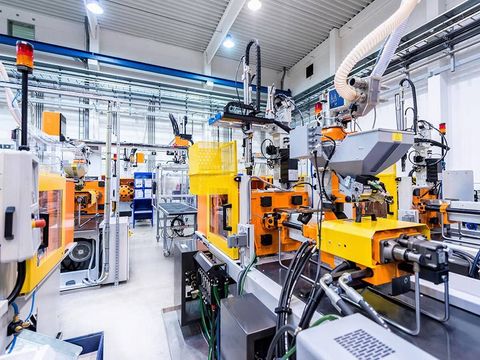
Production machinery performs the main activities involved in transforming raw materials into finished or semi-finished products. Examples include CNC machines, injection molding machines, industrial presses, and cutting systems.
The appropriate machine depends on material type, product design, required accuracy, and expected production volume.
Material Handling Equipment
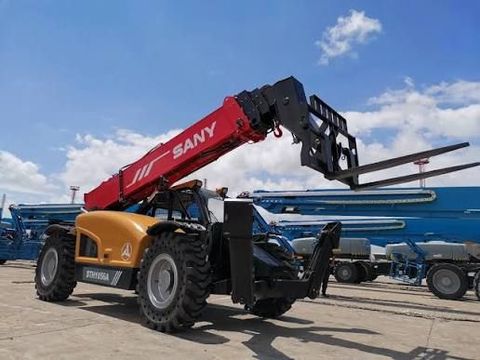
Material handling equipment supports the movement, storage, and transportation of materials within manufacturing facilities. Common examples include conveyors, forklifts, pallet systems, hoists, and industrial lifting equipment.
These systems help organize material movement between production areas and storage locations. Their design should account for available floor space, load requirements, and workplace safety.
Packaging and Assembly Equipment
Packaging machinery prepares finished products for storage, distribution, or transportation. Assembly equipment supports the joining or installation of different product components.
Automated packaging systems, labeling machines, filling equipment, and assembly stations are common examples. Their use depends on product characteristics and packaging requirements.
Industrial Automation Equipment
Industrial automation equipment uses control systems, sensors, robotics, and software to manage manufacturing activities. These technologies can support automated inspection, machine coordination, and production monitoring.
Automation may reduce repetitive manual tasks, but it also requires technical support, operator training, and appropriate system integration.
How to Compare Industrial Equipment Before Purchasing
Selecting machinery requires a clear understanding of operational requirements. Businesses comparing industrial equipment manufacturers should evaluate more than the initial purchase price.
Important Purchasing Factors
The following considerations can help guide equipment evaluation:
Production capacity: Check whether the machine can handle expected production volumes.
Technical specifications: Review operating limits, dimensions, accuracy, and compatibility.
Energy consumption: Consider electricity or fuel requirements during regular operation.
Maintenance requirements: Understand servicing schedules and replacement component availability.
Safety features: Review protective systems, emergency stops, and operating requirements.
Supplier support: Check installation assistance, documentation, training, and service availability.
These factors provide a practical basis for comparing machinery and understanding its suitability for a particular manufacturing environment.
Understanding Manufacturing Equipment Cost
Manufacturing equipment cost includes more than the purchase price. Installation, transportation, operator training, energy consumption, spare parts, and maintenance can influence the total investment.
The following table summarizes common cost considerations.
| Cost factor | What it includes | Why it matters |
|---|---|---|
| Purchase price | Initial machinery cost | Determines upfront investment |
| Installation | Setup and commissioning | Affects readiness for operation |
| Energy | Electricity or fuel usage | Influences operating expenses |
| Maintenance | Inspection and servicing | Supports equipment reliability |
| Spare parts | Replacement components | Affects repair expenses |
| Training | Operator instruction | Supports safe and effective use |
Businesses should compare the estimated total cost of ownership rather than relying only on advertised equipment prices.
The Role of Technology in Manufacturing Efficiency
Technology has changed how industrial equipment operates and communicates. Modern manufacturing facilities increasingly use connected systems to monitor machinery, coordinate production, and understand equipment performance.
Smart Manufacturing Systems
Smart manufacturing combines machinery, sensors, software, and data collection tools. These systems can provide information about production activity, machine conditions, and operational performance.
Manufacturers can use this information to identify delays, monitor equipment usage, and plan maintenance activities. The value of these systems depends on data quality and proper implementation.
Predictive Maintenance
Predictive maintenance uses equipment data and monitoring methods to identify possible maintenance needs before certain failures occur. Sensors may monitor temperature, vibration, pressure, or other operating conditions.
This approach can help maintenance teams plan inspections and reduce unexpected interruptions. However, it requires suitable monitoring systems, accurate information, and trained personnel.
Frequently Asked Questions
How Does Industrial Equipment Improve Manufacturing Efficiency?
Industrial equipment supports repetitive tasks, organized material movement, and consistent production processes. Appropriate machinery can help reduce unnecessary manual work and improve workflow coordination.
Where Can Businesses Find Industrial Equipment Suppliers?
Businesses can research industrial equipment suppliers through manufacturer directories, industry exhibitions, professional networks, and established machinery distributors. Comparing technical specifications, service support, and supplier experience is important.
What Should Businesses Consider When Buying Manufacturing Equipment?
Important factors include production capacity, machine specifications, operating expenses, maintenance requirements, safety features, and supplier support. Equipment should match actual manufacturing needs.
Is Automated Manufacturing Equipment Suitable for Every Factory?
Not necessarily. Automation depends on production volume, product complexity, available investment, workforce skills, and operational requirements. Some facilities may benefit more from partially automated systems.
How Often Should Industrial Machinery Be Maintained?
Maintenance frequency depends on equipment type, operating hours, manufacturer instructions, and working conditions. Regular inspections and scheduled servicing help identify wear and potential performance problems.
Conclusion
Industrial equipment is an important part of modern manufacturing operations. From production machinery and material handling systems to industrial automation equipment, different technologies support organized workflows and consistent production.
Choosing suitable machinery requires careful evaluation of operational needs, total costs, safety requirements, and maintenance support.

Related Post...
How Industrial Equipment Drives Modern Manufacturing Efficiency
Updated: November 25, 2026
Read More
How Heavy Mining Excavators Power Large-Scale Mining Operations
Updated: November 25, 2026
Read More