CNC Machines and Their Role in Modern Manufacturing
CNC machines are transforming how manufacturers produce precision components.
CNC Machines
These computer-controlled systems perform cutting, drilling, milling, and shaping operations with programmed instructions. Businesses exploring CNC machines for sale often compare equipment based on production requirements, material compatibility, accuracy, and operating costs.
CNC stands for Computer Numerical Control. It refers to a manufacturing process in which computers control machine movements and operations. Instead of depending entirely on manual adjustments, operators use programmed instructions to guide tools through specific manufacturing tasks.
Modern industries use CNC technology to produce components for automotive manufacturing, aerospace, electronics, medical equipment, and general engineering. Understanding how these machines work helps businesses evaluate suitable equipment and make informed purchasing decisions.
What Makes CNC Machines Different?
Traditional machining often requires operators to control machine movements manually. CNC equipment follows programmed instructions, allowing machines to repeat operations with consistent settings.
This approach can reduce manual intervention and improve production consistency. However, the final results still depend on programming quality, machine condition, tool selection, and operator experience.
Importance of CNC Machines in Manufacturing
CNC machines play an important role in modern manufacturing because industries require components with accurate dimensions and repeatable quality. Computer-controlled machining helps manufacturers manage complex production tasks and maintain consistent processes.
These machines also support different production scales. Small workshops may use CNC equipment for specialized components, while larger factories may integrate multiple machines into automated production systems.
Improving Production Accuracy
CNC machines follow programmed tool paths and movement instructions. This allows manufacturers to produce components according to specified dimensions and design requirements.
Accuracy depends on several factors, including machine calibration, cutting tools, material properties, and operating conditions. Regular inspection helps maintain manufacturing consistency.
Supporting Production Efficiency
Automated machine movements can reduce the time required for repetitive manufacturing operations. Once a program has been properly prepared and tested, similar components can be produced using the same instructions.
This can improve workflow planning and reduce certain manual tasks. However, setup time, programming, maintenance, and material handling still contribute to overall production time.
Reducing Material Waste
Properly planned CNC operations can help manufacturers use raw materials more efficiently. Computer-aided design and manufacturing software can assist with planning cutting paths and positioning components.
Material waste is not eliminated entirely. Cutting allowances, design requirements, machine settings, and material characteristics all influence the amount of unused material.
Types of CNC Machines Used in Industry
Different CNC machines perform different manufacturing operations. Selecting the correct equipment requires understanding the materials, component designs, and production requirements involved.
CNC Milling Machines
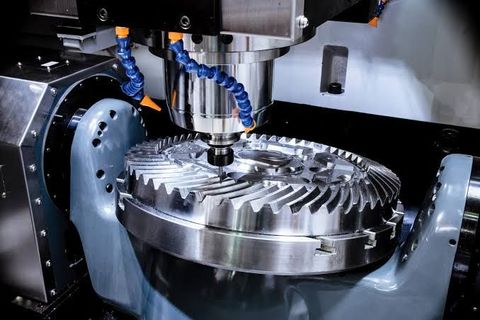
CNC milling machines use rotating cutting tools to remove material from a workpiece. They are commonly used to create slots, holes, surfaces, and complex shapes.
These machines are used in automotive components, industrial equipment, aerospace parts, and engineering applications.
CNC Lathes
CNC lathes rotate the workpiece while cutting tools remove material to create the required shape. They are commonly used for cylindrical components, including shafts, bushings, and threaded parts.
Manufacturers often compare CNC lathe specifications based on spindle speed, working capacity, tooling arrangements, and component dimensions.
CNC Routers
CNC routers are generally used for cutting and shaping materials such as wood, plastics, composites, and certain non-ferrous materials.
They are commonly found in furniture manufacturing, signage production, cabinet making, and decorative component manufacturing.
CNC Plasma and Laser Cutting Machines
CNC plasma machines use an electrically conductive gas to cut electrically conductive materials. Laser cutting machines use concentrated laser energy to cut or process materials according to programmed paths.
Both technologies are used in sheet metal fabrication, although their material compatibility, cutting characteristics, and operating requirements differ.
Comparing CNC Machine Types
The following table explains common CNC equipment and its typical applications.
| CNC machine type | Main operation | Common applications |
|---|---|---|
| CNC milling machine | Material removal using rotating tools | Metal components and industrial parts |
| CNC lathe | Turning cylindrical materials | Shafts, bushings, and threaded parts |
| CNC router | Cutting and shaping | Wood, plastics, and composites |
| CNC plasma cutter | Plasma-based metal cutting | Sheet metal fabrication |
| CNC laser cutter | Laser-based material processing | Metal sheets and selected non-metal materials |
The appropriate machine depends on the required component design, production volume, material type, and available workspace.
Factors to Consider When Buying CNC Machines
Businesses researching CNC machine manufacturers or comparing CNC machining center prices should evaluate more than the initial purchase cost. Equipment specifications and long-term operating requirements can influence overall manufacturing expenses.
Machine Capacity and Specifications
Machine capacity determines the size and type of components that can be processed. Important specifications include working dimensions, spindle speed, axis movement, tool capacity, and maximum workpiece weight.
Buyers should compare these specifications with their actual production requirements instead of selecting equipment based only on appearance or advertised capabilities.
Material Compatibility
Not every CNC machine is suitable for every material. Equipment designed for woodworking may have different capabilities from machines intended for heavy metal machining.
Before purchasing, manufacturers should confirm that the machine supports their intended materials, cutting requirements, and tooling arrangements.
Purchase Price and Operating Costs
CNC machine prices vary according to machine type, size, configuration, automation features, and manufacturer. Additional expenses may include installation, software, cutting tools, operator training, electricity, and maintenance.
A complete cost assessment should consider both the initial investment and ongoing operating expenses.
Manufacturer Support and Maintenance
Technical support and spare-part availability can influence machine reliability and production planning. Buyers should review warranty conditions, service arrangements, maintenance requirements, and documentation before making a purchasing decision.
Role of Software and Automation
CNC manufacturing depends on software that converts product designs into machine instructions. CAD software is used to create digital designs, while CAM software helps generate tool paths and machining instructions.
These programs help operators plan manufacturing operations before production begins. Depending on the equipment, additional automation features may include automatic tool changers, robotic material handling, and integrated inspection systems.
Automation can reduce certain repetitive tasks, but skilled operators remain important for programming, setup, monitoring, troubleshooting, and quality control.
Frequently Asked Questions
What Should Businesses Check Before Buying CNC Machines?
Businesses should evaluate machine capacity, material compatibility, accuracy requirements, software, operating costs, maintenance, and manufacturer support. These factors help determine whether equipment matches production needs.
How Much Does a CNC Machine Cost?
CNC machine prices depend on machine type, size, configuration, features, and manufacturer. Installation, software, tooling, and maintenance may add to the overall investment.
Which CNC Machine Is Suitable for Small Businesses?
The suitable option depends on the products being manufactured. Small workshops may consider compact CNC routers, milling machines, or lathes according to their materials and production requirements.
Are CNC Machines Difficult to Operate?
Basic operation can be learned through appropriate training, but programming, machine setup, and troubleshooting require technical knowledge. Training requirements vary according to machine complexity.
How Often Do CNC Machines Require Maintenance?
Maintenance schedules depend on the machine model, operating hours, workload, and manufacturer instructions. Regular cleaning, lubrication, inspection, and calibration help maintain equipment condition.
Conclusion
CNC machines are an important part of modern manufacturing because they support automated machining, repeatable production, and complex component fabrication. Different machine types serve different industrial requirements, making equipment selection an important business decision.
Before purchasing, manufacturers should compare specifications, costs, material compatibility, maintenance requirements, and technical support.

Related Post...

Commercial HVAC Innovations Transforming Energy Efficiency and Comfort
Updated: November 26, 2026
Read More